



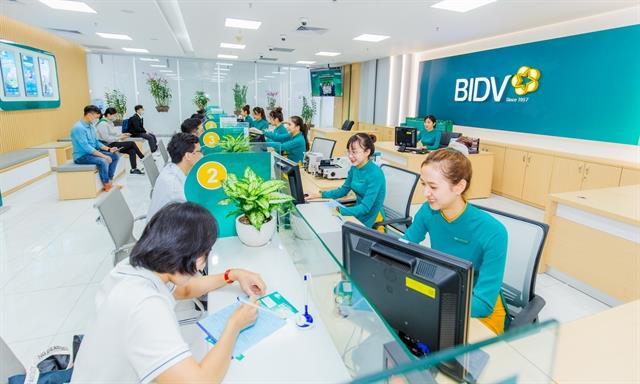






The State Treasury deposited more than VNĐ650 trillion ($21.3 billion) at State-owned commercial banks by the end of the first quarter of 2026, according to banks’ financial statements.
Việt Nam is accelerating past mere adoption to become a powerhouse of digital commerce innovation, according to a study entitled “State of Digital Commerce in Asia Pacific 2025”.
The Ministry of Finance has set out three special mechanisms to boost the development of the State economic sector, focusing on strengthening strategic reserves and enhancing the role of State-owned enterprises (SOEs).
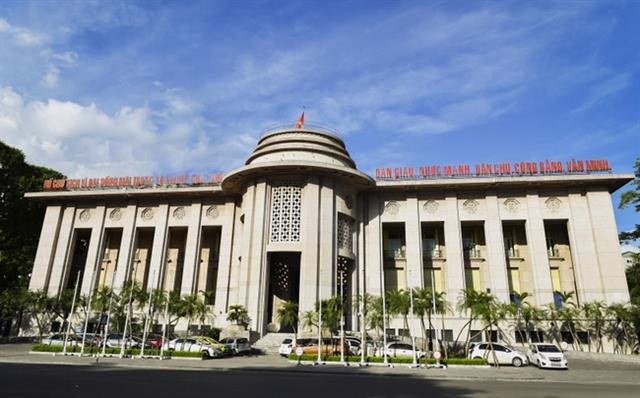
The State Bank of Vietnam (SBV) has received 11 applications from companies and commercial banks seeking for licences to produce gold bars, a SBV’s senior official said on Tuesday.
Việt Nam needs to foster a new generation of private enterprises with stronger technological capabilities to lead key industries and shift from supporting growth to driving the country’s modernisation.
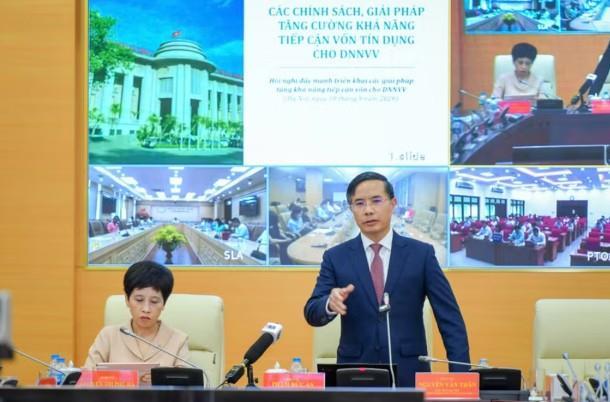
Commercial banks have committed to lower deposit and lending rates to support economic growth and manage inflation risks at the meeting with Governor of the State Bank of Việt Nam Phạm Đức Ấn on April 9.
Global geopolitical tensions have also had a notable impact. The conflict in the Middle East since late February has disrupted global energy supply, driving up fuel prices, increasing production costs, and affecting business performance.
Banks must continue publicly disclosing average lending rates, the spread between deposit and lending rates, and interest rates of credit schemes and packages on their websites, making it easier for individuals and firms to access capital.
The maximum credit exposure for a single borrower would not exceed 38 per cent of a bank’s owned capital, while lending to a borrower and related parties would be capped at 52 per cent of bank capital when financing large...
In the first two months of this year, the State Treasury raised more than VNĐ60.5 trillion in government bonds, completing about 55 per cent of its first-quarter issuance plan and roughly 12 per cent of the full-year target.
A draft circular proposes increasing the threshold to VNĐ400 million for loans issued by credit institutions and VNĐ200 million for those provided by people’s credit funds.
In the coming period, the SBV will adjust interest rate policy in line with macroeconomic conditions and inflation trends, and require credit institutions to publicly disclose lending rates to improve transparency.
Domestic revenue continued to hold the largest part, VNĐ184.8 trillion, or 30.3 per cent of the annual plan, up 8.8 per cent year-on-year, local authorities reported.
The loans are expected to come from government bond issuance, ODA loans, preferential foreign loans, international bond issuance, and other legitimate financial sources.